What are the Ways Through HR Can Enhance Employee Attendance and Time Tracking?
Share
Key Takeaways
Accurate employee attendance tracking helps HR teams understand attendance patterns and manage workforce schedules.
Manual errors can be minimised and payroll and attendance records made easier with a digital employee time tracking system.
Policies, processes, and technology all play a key role in effective attendance management.
HR teams should track patterns rather than treating every attendance issue as an isolated event.
Timekeeping systems should accurately capture hours worked and support applicable recordkeeping requirements.
Managing attendance becomes harder as teams grow, schedules become more flexible, and employees work across different locations. Manual timesheets, spreadsheets, and disconnected systems can make it difficult to maintain accurate records or identify recurring attendance problems.
A structured approach to attendance and time tracking gives HR teams better visibility while making everyday processes easier for employees and managers.
Why Is Employee Attendance Tracking Important?
Employee attendance tracking is more than recording who arrived at work. It gives HR teams visibility into attendance patterns, working hours, absences, late arrivals, early departures, and schedule adherence.
Accurate records can also support payroll and compliance processes. Under the Fair Labor Standards Act (FLSA), covered employers must maintain records of hours worked by nonexempt employees. The U.S. Department of Labor does not require employers to use a specific timekeeping method, but records must be complete and accurate.
Staff log their hours on paper or in spreadsheets. This can be effective when the team is smaller, but is hard to manage if the team is larger.
Time Clocks and Punch Systems
Employees clock in and out using a physical or digital system. These records can provide a straightforward way to capture start and end times.
Digital Attendance Systems
Cloud-based systems allow employees to record attendance through web or mobile applications. HR teams can view attendance data centrally and automate parts of the approval and reporting process.
Integrated HR Platforms
An integrated system can connect attendance with payroll, leave, scheduling, and employee records. This reduces the need to move information between separate tools.
The right approach depends on the workforce. Employers are not required to use time clocks under the FLSA, and other methods can be used as long as required records are accurate.
6 Ways to Improve Employee Attendance
If the goal is to improve employee attendance, HR teams should focus on visibility, consistency, and clear expectations.
1. Establish Clear Attendance Policies
Staff should be aware of working hours and expectations, reporting absences and any rules regarding lateness or absences.
2. Use Accurate Time Tracking
Reliable employee time tracking reduces uncertainty around hours worked and gives HR a consistent record to review.
3. Monitor Attendance Patterns
A single late arrival may not indicate a broader problem. Repeated absences, frequent lateness, or patterns around particular shifts can provide more useful information.
4. Make Absence Reporting Simple
There should be a straightforward process for employees to notify absences or time off. There is the potential for digital workflows to send work requests to the right manager and keep a track record of the results.
5. Give Managers Useful Visibility
Managers need timely attendance information to address scheduling issues and respond to recurring patterns. Access should be based on appropriate permissions.
6. Review the Data Regularly
Attendance information becomes more useful when HR reviews it consistently. Trends can help identify scheduling problems, recurring coverage gaps, or processes that need adjustment.
What Are Attendance Tracking Best Practices?
Effective attendance tracking best practices include:
Keep attendance policies clear and accessible.
Use consistent tracking methods across comparable employee groups.
Keep accurate records of hours worked.
Connect attendance data with payroll and leave processes where appropriate.
Limit access to employee information based on role and business need.
Review attendance trends instead of relying only on individual incidents.
Provide a clear process for correcting inaccurate time records.
Technology should support these practices rather than replace HR judgment. The Department of Labor also notes that employers remain responsible for accurately accounting for hours actually worked, including work performed outside a scheduled workplace or shift.
How Does Time Tracking Support Employee Time Management?
Employee time management becomes easier when employees and managers have visibility into schedules, working hours, and time-off records.
For HR teams, workforce time tracking can help connect individual attendance information with broader workforce planning. It can also reduce repetitive administrative work when attendance, leave, and employee records are managed within one system.
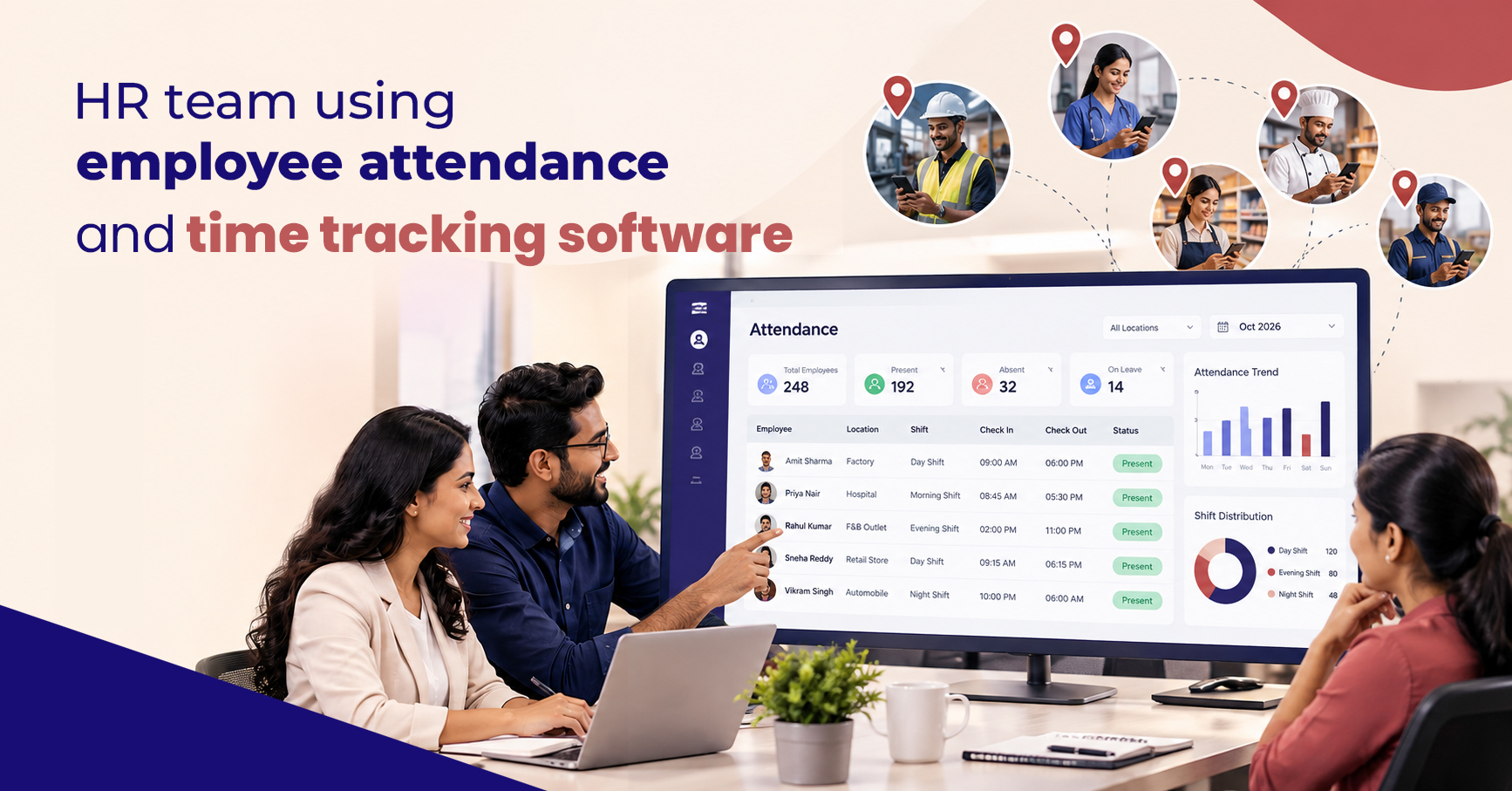
An attendance management software platform can centralize these processes, while employee management software can provide a broader view of employee records and related HR workflows.
Solutions such as TruHR can help organizations bring attendance, leave, payroll, and employee management processes into a connected HR environment.
What is employee attendance tracking?
What is the best way to track employee attendance?
It depends on the organization. There are digital attendance systems that can give central records and also lessen manual workloads, or even simpler options work for smaller sized teams.
How can HR improve employee attendance?
What is employee time tracking?
Why is accurate time tracking important?
TruHR transforms traditional HR management by automating essential tasks such as onboarding, attendance, leave management, payroll, compliance and field employee management.